Padideh Nouri
Computer Science Student at McGill & Mila
(AI for Scientific Discovery)
Email / LinkedIn / Github / Google Scholar
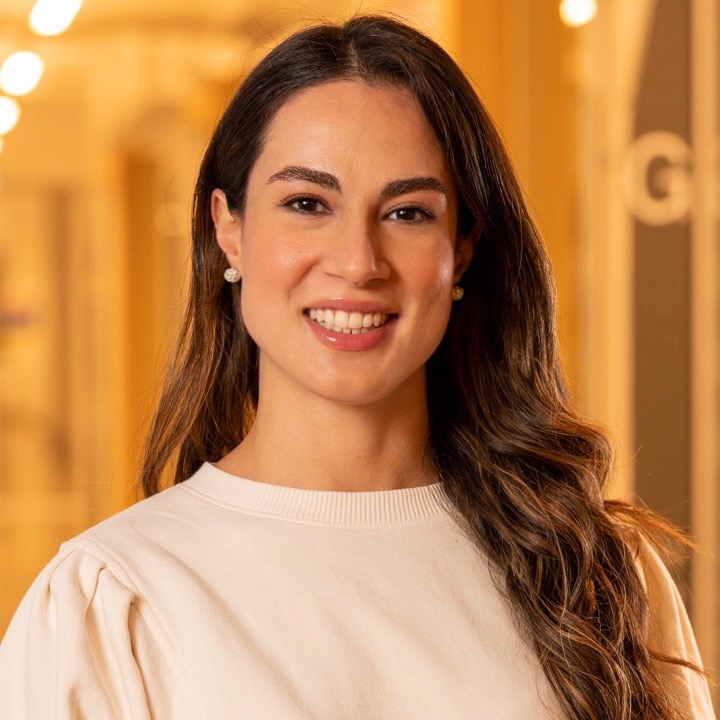
Hi! I am a third-year Computer Science PhD student at McGill University, advised by Prof. Doina Precup. My research focuses on designing efficient algorithms for solving long-horizon, sequential problems. I have a strong interest in tackling multidisciplinary challenges that demand both principled and creative solutions.
Previously, I completed my M.Sc. in Computer Science at Université de Montréal under the supervision of Prof. Pierre-Luc Bacon, where I enhanced the exploration capabilities of meta-learning and Bayesian optimization techniques for healthcare applications. My work focused on designing biological sequences such as antimicrobial peptides (AMPs) with tailored properties. Prior to this, I earned a B.Sc. in Bioinformatics at Université de Montréal.
Alongside my academic journey, I have also gained experience through internships in both industry and research labs, working on diverse interdisciplinary problems.
Education
- Ph.D. in Computer Science – McGill University, Mila
- Research focus: Credit Assignment Problem in Reinforcement Learning, Sample Efficiency
- Courses: Reinforcement Learning, Advanced Topics in RL and Adaptive Agent Design, Network Science, Probabilistic Graphical Models
- M.Sc. in Computer Science – University of Montréal, Mila
- Thesis: Sample efficient reinforcement learning for biological sequence design [link]
- Research focus: Intrinsic Motivation in RL, Self-Supervised RL, Meta Learning, Exploration via Auxiliary Rewards
- Courses: Fundamentals of Machine Learning, Data Science, Deep Learning, Modern Natural Language Processing
- B.Sc. in Bioinformatics – University of Montréal
- Selected Courses: Calculus, Linear Algebra, Probability, Statistics, Discrete Mathematics, Data Structure, Algorithms, Biochemistry, Organic Chemistry, Genetics
Publications
Conference
- Tristan Deleu, Padideh Nouri, Nikolay Malkin, Doina Precup, and Yoshua Bengio, “Discrete probabilistic inference as control in multi-path environments,” Uncertainty in Artificial Intelligence Conference UAI, 2024. [Paper][Code]
Workshop
- Tristan Deleu, Padideh Nouri, Yoshua Bengio, and Doina Precup, “Relative Trajectory Balance is equivalent to Trust-PCL,” in Frontiers in Probabilistic Inference: Sampling Meets Learning Workshop at NeurIPS, 2025. [Paper][Code]
- Priyesh Vijayan, Padideh Nouri, Rishav Rishav, Sarath Chandar, Yash Chandak, Mathieu Reymond, Samira Ebrahimi Kahou, and Doina Precup, “Revisiting Laplacian Representations for Value Function Approximation in Deep RL,” in Inductive Biases in Reinforcement Learning Workshop at RLC, 2025. [Paper]
- Leo Feng, Padideh Nouri, Aneri Muni, Yoshua Bengio, and Pierre-Luc Bacon, “Designing biological sequences via meta-reinforcement learning and bayesian optimization,” in Machine Learning for Structural Biology Workshop at NeurIPS, 2022. [Paper]
Experience
- Machine Learning Research Intern – Genentech, San Francisco Bay Area
- Meta Learning and Reinforcement Learning for antibody design, Developing Multi Objective Optimization schemes
- Undergraduate research Intern – at Pharmacology department, Université de Montréal
- High-Throughput Simulation: Optimizing FlexAID for ultra high throughput docking by leveraging artificial intelligence techniques. Benchmarking using DUDE database. [fall 2020][Github]
- Details: FlexAID is a virtual docking software based on surface complementarity. It uses a genetic algorithm to predict the binding affinity of a protein and a small molecule (drug). I have used machine learning methods in FlexAID to optimize the prediction of binding accuracy and efficiency. This consists of integrating classifiers within FlexAID to eliminate the molecules that have a low chance of achieving high rank. I have used NLP and DL approaches to model the molecules structure and docking-score relationship. These methods significantly accelerate FlexAID and enable this software to rank affinities of ultra-large libraries.
- FlexAID: Designed a wrapper for docking software which enables the automatization of the whole process. Validated by MMPBSA calculation after MD simulations using Gromacs software with CHARMM36 force fields. [summer 2020][Github]
- Mutation Pipeline (MP): Built a protein engineering pipeline to predict the effects of Amino Acids mutations on protein stability, using ENCoM, FlexAID and Modeller softwares. Validated with ProTherm database. [summer 2019][Github]
- High-Throughput Simulation: Optimizing FlexAID for ultra high throughput docking by leveraging artificial intelligence techniques. Benchmarking using DUDE database. [fall 2020][Github]
Competitions
- Kaggle competition: An image classification task in which our team used deep learning models to extract features and to train the network. Our suggested architecture of CNN and our data augmentation techniques led to 91% accuracy score and ranked as best model in the competition. [fall 2020][Kaggle]
 Padideh Nouri